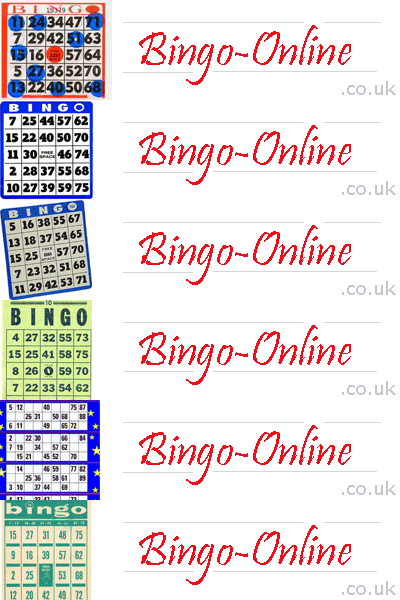
A Brief History of Bingo
Bingo as we know it today is a descendant of the Italian Lottery, created early in the 16th Century.
As Lotto was developed in Europe, each player was dealt one card with a selection of numbers from 1 to 90 marked on the card, that bingo card is not dis-similar to the modern day Bingo card. |
Bingo History ... continued
A token would be drawn from a cloth bag by the caller and, as today, it would be read aloud and the players would cover the numbers that were on their own card.
The first player to have completely covered a horizontal row was the winner - see below how bingo has been used for educational purposes ... |
 |
Bingo Education
There have been many variants of Lotto, and Bingo developed for educational purposes.
As is the case with games such as Dominoes, the numbers are replaced with animals, or letters, to help children learn through play. This type of game helps children to learn to count, recognise images, and also read.
Who would have thought the history of bingo would show you it has taught the world as well.
To get playing Bingo online - click a link on the right of this page! |
"Beano"
In the late 1920's an American by the name of Edwin Lowe visited a carnival where one of the attractions had a huge amount of interest, a variation of the original Lotto game called Beano.
Instead of today when a number is called out one marks their card towards winning the game in Beano the actual "marking" was done by the placing of a bean over the called out number, thereby creating re-usable cards without any markings on them.
A big shout of "BEANO" was to be heard when a player had completed a line. |
|
From "Beano" to "Bingo"
Mr Lowe decided he would try out this new game, even though he was unable to get a game at the carnival.
He purchased dried beans, a numbering stamp and some cardboard for the cards. One of the players, a lady, became so excited that when the winning bean was placed on her Beano card she shouted "BINGO" instead of "BEANO" - and that is where the name Bingo originates.
Mr Lowe brought the Bingo game to market, and there were many copies out there too but it wasn't for a few months until he realised that for the game to have many players, and therefore many cards ... |
Lowe would need a system of cards that would help to ensure that there were not so many winners in each game.
For this help he enlisted Professor Leffler, a Mathematics Professor, who was charged with devising a system with six thousand Bingo cards without repeating number groups - no small feat indeed.
In fact Bingo is accredited with turning the Professor insane after devising the six thousand card system - so the next time you hear somebody mention they are Bingo mad have a little smile to yourself about the above!
Did you know ...?
Only 30% of bingo players are men! |
 |